


Making Mediterranean scuba diving more inclusive
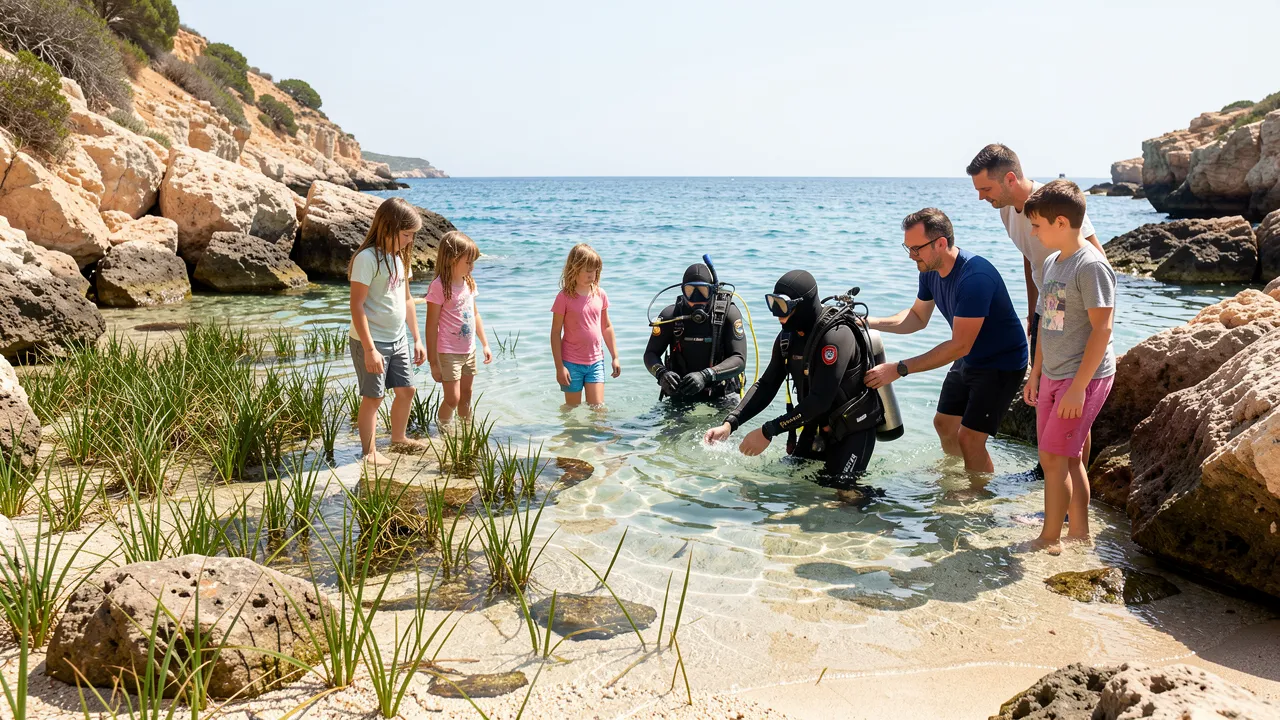
Mediterranean scuba diving is often presented as an easy escape into clear water, rocky coves and colourful reefs. Access is not equally simple for everyone. Mobility limitations, sensory needs, chronic health conditions, financial constraints, language barriers and a lack of reliable local information can all shape whether a dive feels possible and safe. A more inclusive approach begins by treating access as a practical part of dive planning, not as an afterthought.
Transparent local information makes Mediterranean diving more accessible
Mediterranean sites vary greatly, sometimes within a few kilometres. A sheltered bay may offer a shallow sandy entry and calm water, while a nearby point can involve slippery rocks, stairs, surge and a long surface swim. Operators who describe these details plainly help divers make informed choices before committing time, money or energy to an outing.
For local context on sites, training and guided outings along the French coast, a diving guide can help you start a conversation with professionals familiar with regional conditions. Ask about the exact entry route, depth profile, current patterns, water temperature and surface conditions rather than relying on attractive photographs. Mediterranean diving may include Posidonia seagrass meadows, rock walls, wrecks and lagoons, each with different practical demands. Local knowledge also helps identify alternatives when wind or swell makes the original plan unsuitable.
Clear communication supports safety and dignity. “Accessible” can mean different things to different people, so broad labels are less useful than specific answers. A dive centre should be able to explain whether there is level access to changing areas, where equipment is assembled, how far tanks must be carried, and whether staff can provide agreed assistance in and out of the water.
Access improves when assumptions are replaced by clear questions, honest answers and shared planning.
Questions that reveal the real conditions
Before booking, you can ask a dive operator for concrete information:
- Is the parking area close to the entry point, and is the route firm, level or uneven?
- Are there steps, boulders, steep ramps, loose gravel or narrow paths?
- Can equipment be transported by trolley, vehicle or staff support?
- Is there a shallow area for buoyancy checks and a gradual descent?
- What are the usual wind directions, swell exposure and visibility at this site?
- What weather-based alternative is available if conditions change?
These questions benefit every diver, including beginners, older participants and people returning after injury. They also prevent an uncomfortable situation in which someone feels pressured to continue with a plan that no longer fits their needs.
Planning choices can reduce barriers before anyone enters the water
An inclusive dive plan considers the full journey, from arrival to exit. You may need to account for public transport, accessible parking, toilets, changing space, lift availability at a marina, rest periods, medication storage and a companion’s role. Sharing this information in advance gives the operator time to arrange staff, select a suitable site or suggest another date.
Shore dives and boat dives offer different forms of access
Shore diving in France can be highly manageable when a protected beach or calm cove has nearby parking, a short approach and a sandy or gently sloping entry. It can also be demanding where access involves steep coastal paths, algae-covered rocks or a surf zone. A site’s classification as a shore dive says very little by itself, so request a description of the terrain and exit plan.
Boat diving avoids some shoreline obstacles, but introduces others. You may face dock steps, gaps between pontoon and vessel, narrow deck space, ladders, moving surfaces and a potentially challenging reboarding process. Ask whether the boat has a stable boarding arrangement, shaded seating, accessible toilets, a lift or adapted ladder, and sufficient crew to support safe transfers. Check whether the outing involves a giant stride, a seated entry or another method compatible with your needs.
For adaptive scuba diving, communication should cover certification, medical clearance where relevant, buddy arrangements and the equipment you use. Some divers may require a full-face mask, additional buoyancy support, modified fins, tactile signals or a specially trained buddy. Qualified professionals can explain what they can safely provide and where their competence ends. Honest boundaries are part of good inclusion.
Conditions must be assessed on the day
Mediterranean water can look calm from shore while current or surge is uncomfortable below the surface. Seasonal changes matter: summer may bring warmer water and busy sites, while colder months can reduce crowds but increase exposure to weather. Rain can affect visibility near runoff areas, and wind can rapidly alter a boat route or a cove’s surface conditions.
You retain the right to decline a dive if the real conditions differ from what was discussed. A respectful operator will treat a changed plan as normal risk management, not as a personal failure. Build flexibility into travel plans where possible, particularly if you need a specific entry type or support arrangement.
Inclusive diving also protects the Mediterranean underwater environment
Widening participation does not mean lowering environmental standards. Many accessible, shallow sites include sensitive habitats, especially Posidonia seagrass meadows. These underwater plants shelter juvenile fish, stabilise sediment and store carbon, yet they are vulnerable to anchors, careless finning and contact from poorly controlled equipment.
Divers and operators can protect these areas through simple choices. Maintain buoyancy before approaching the seabed, keep fins clear of seagrass, use established moorings rather than anchoring over sensitive habitat, and secure gauges or accessories so they do not drag. In a lagoon or confined site, slow movement and small groups can reduce sediment disturbance and improve visibility for everyone.
Inclusion also involves social conduct. Do not assume that a diver needs help based on appearance, mobility aid, age, gender or communication style. Ask what assistance they want, obtain consent before touching equipment or supporting a transfer, and speak directly to the diver rather than only to their companion. These habits create a more welcoming dive community while preserving professional safety procedures.
Practical steps for more welcoming Mediterranean dive days
A successful inclusive outing is built through local detail, flexibility and mutual respect. Whether you choose a tranquil shore entry near Marseille, a boat trip to a rocky reef, or a sheltered lagoon, the best option is the one that matches the participant, the team and the day’s actual conditions.
- Request site-specific access information before paying a deposit.
- Share your support needs, equipment preferences and relevant certification details early.
- Compare shore and boat logistics instead of assuming one format is easier.
- Ask for a weather alternative and be prepared to postpone when conditions shift.
- Choose operators who discuss assistance clearly, respectfully and within their training.
- Protect Posidonia, reefs and wrecks through careful buoyancy and low-impact practices.
Mediterranean scuba diving becomes more open when practical barriers are named early and addressed without judgment. Better information, adaptable planning and considerate teamwork allow more people to experience the coast safely, confidently and on their own terms.